Interoperability rarely gets the spotlight.
It sits beneath regulation, technology, and industry collaboration. When it works, ecosystems scale quietly. When it does not, fragmentation becomes visible very quickly.
Europe has already lived through one large interoperability journey with traffic data. Today, it is entering another one with Digital Product Passports and Digital Battery Passports.
The regulations are advancing. The pilots are running. The standards are being written.
The central question is how interoperability will take shape.
Europe Has Solved Interoperability Before
Before intelligent transport systems became reliable across borders, traffic data in Europe was fragmented. An accident described in one country’s system might not look the same in another. Location formats differed. Message structures were inconsistent.
Over time, Europe converged on a shared framework: DATEX II.
DATEX IIDATEX II, standardized under the EN 16157 series within CEN, provides a common information model and structured exchange formats for traffic and travel information.
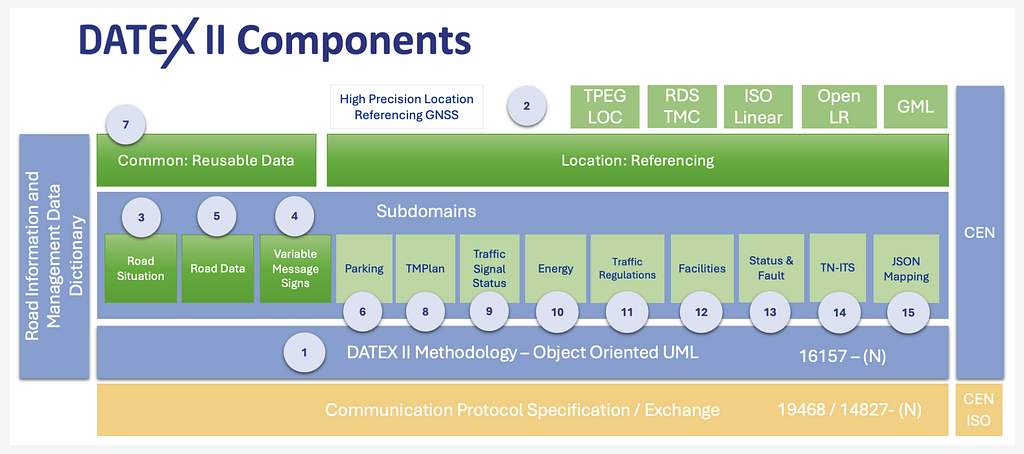
What made DATEX II effective was not only XML. It was shared semantics. The standard defined what an incident is, how validity periods work, how updates are handled, and how locations are referenced.
National Access Points under the EU ITS framework rely heavily on DATEX II to ensure harmonized data exchange:
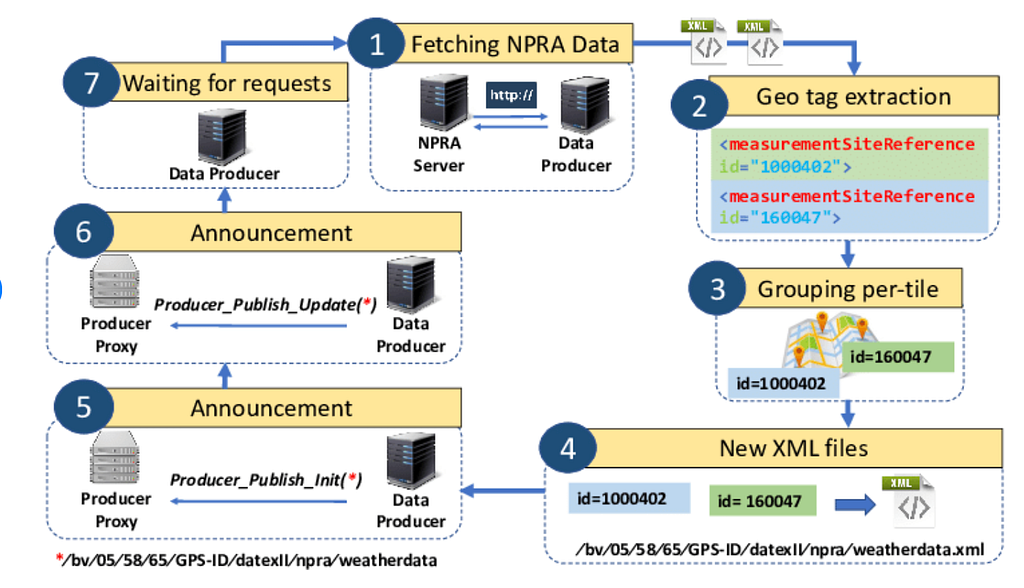
Europe did not remove complexity. It organized it into a common language.
A New Layer of Regulation: Digital Product Passports
Today, Europe is building a similar digital foundation for products.
The Ecodesign for Sustainable Products Regulation (EU 2024/1781) introduces the concept of a Digital Product Passport.
Official regulation text (EU 2024/1781)The DPP is defined as a structured digital record containing relevant product information to support sustainability, circularity, and compliance. Detailed requirements will be specified through delegated acts for different product groups.
For batteries, the EU Battery Regulation (EU 2023/1542) introduces sustainability, carbon footprint, due diligence, and performance requirements, including a battery passport for certain categories.
Official Battery Regulation (EU 2023/1542)Unlike traffic, which is a single domain, product passports will span multiple industries. Each product group brings different data attributes, lifecycle stages, actors, and compliance requirements.
Interoperability therefore becomes central from the beginning.
Standardization Is Underway
To support harmonization, the European Commission issued a standardization request to CEN, CENELEC, and ETSI.
CEN and CENELEC have established Joint Technical Committee 24 dedicated to Digital Product Passport standards.
CEN-CENELEC JTC 24 overviewThis committee is developing the framework and system standards intended to support interoperability across product categories.
This mirrors how DATEX II was anchored within European standardization structures.
The CIRPASS Architecture: A Federated Model
In parallel with formal standards work, the EU-funded CIRPASS project has developed a reference architecture for Digital Product Passports.
CIRPASS project siteSystem Architecture Deliverable (D3.2)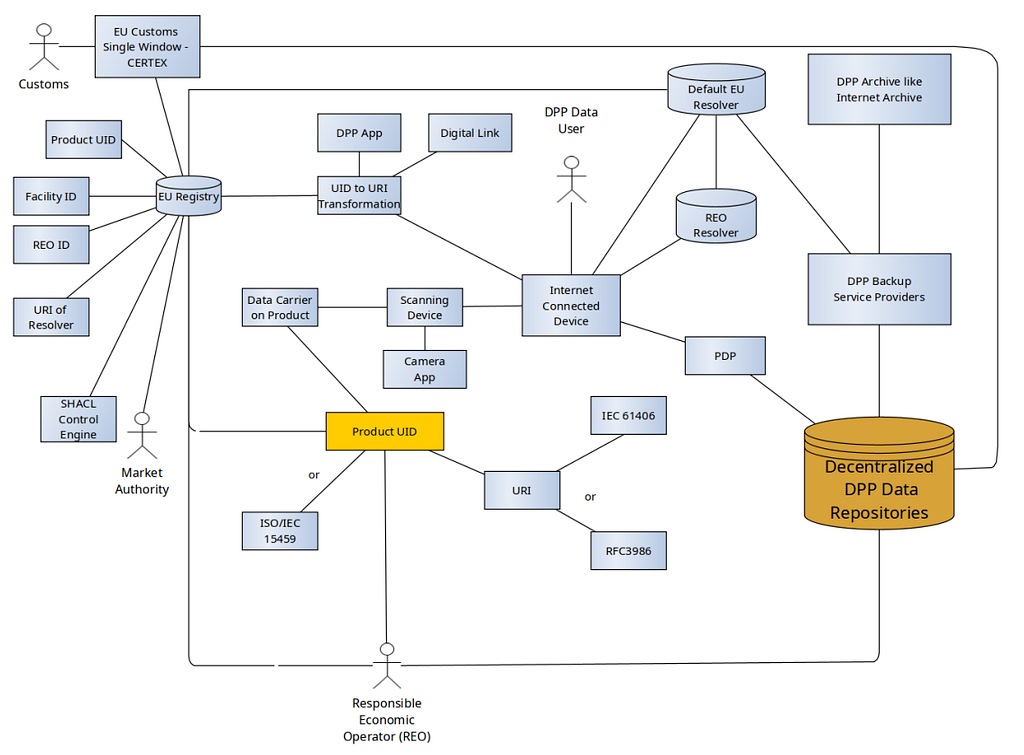
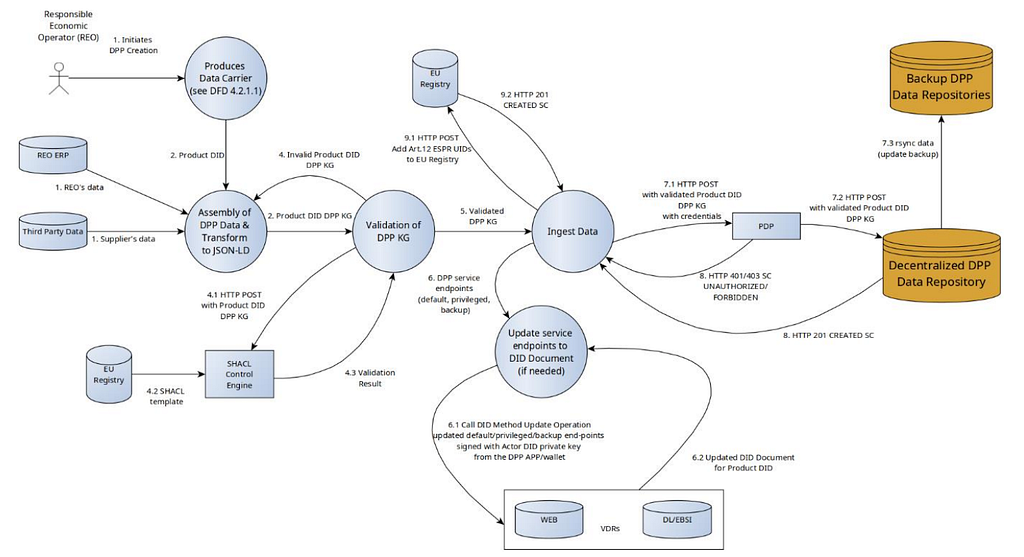
The architecture does not describe a single centralized passport database. Instead, it outlines a distributed model where data may reside across different actors while remaining discoverable and accessible through standardized interfaces.
This layered structure reflects technical interoperability, semantic interoperability, and governance layers working together.
In that sense, it echoes the architectural discipline that underpinned DATEX II.
Identity and Resolution
Reliable product identification is foundational.
GS1 standards, particularly GS1 Digital Link, provide mechanisms for encoding globally unique product identifiers into web-compatible formats, typically represented via QR codes.
GS1 Digital Link overviewWithin the DPP architecture, the Product UID connects physical products to digital records via resolvers and registries.
In traffic systems, location referencing was one of the most complex interoperability challenges. In product passports, identity resolution plays a similarly foundational role.
Battery-Specific Developments
Battery passports add sector-specific complexity.
The Battery Pass initiative has published technical and content guidance aligned with the EU Battery Regulation.
Battery PassAt a global level, the Global Battery Alliance has developed rulebooks addressing greenhouse gas accounting and sustainability metrics for batteries.
Global Battery Alliance publicationsIndustry ecosystems such as Catena-X are also building interoperable data exchange frameworks that include Digital Product Passport use cases within automotive and battery supply chains.
Catena-X Digital Product Passport use caseThese initiatives contribute to semantic consistency and implementation experience across industries.
Two European Interoperability Journeys
Looking at the DATEX II diagrams alongside the CIRPASS DPP architecture diagrams reveals something interesting.
Both show:
- Clearly defined modeling methodologies
- Layered architectures
- Defined roles and actors
- Structured data formats
- Exchange mechanisms
- Governance embedded into technical design
One ecosystem is mature and operational across Member States.
The other is regulated, architected, and actively being standardized.
In both cases, interoperability is not an afterthought. It is the enabling layer.
An Ongoing European Standardization Story
Digital Product Passports and Battery Passports are entering implementation phases across industries. Regulation is in place. Standardization is progressing. Architecture frameworks exist. Industry consortia are building complementary infrastructure.
What remains to be shaped is how coherently these layers converge into a seamless interoperability framework across the European market.
Europe’s experience with DATEX II demonstrates that shared semantics and structured architecture can enable cross-border digital ecosystems.
The current DPP and DBP developments represent the next chapter in that broader European journey toward interoperable digital infrastructure.
The foundation is being laid. The evolution is underway.
Interoperability is once again at the center of it.